Weaponising the Far Right
Foreign Influence in Europe Today

This article is based on my report to the performative panel “Angriff. Playbooks und Technologien der Machtübernahme” (Attack: Playbooks and Technologies of Power Seizure), held as part of the 12-part event series “Zeit der Monster” (Time of Monsters) at the Austrian Museum of Military History on 28 May 2026.
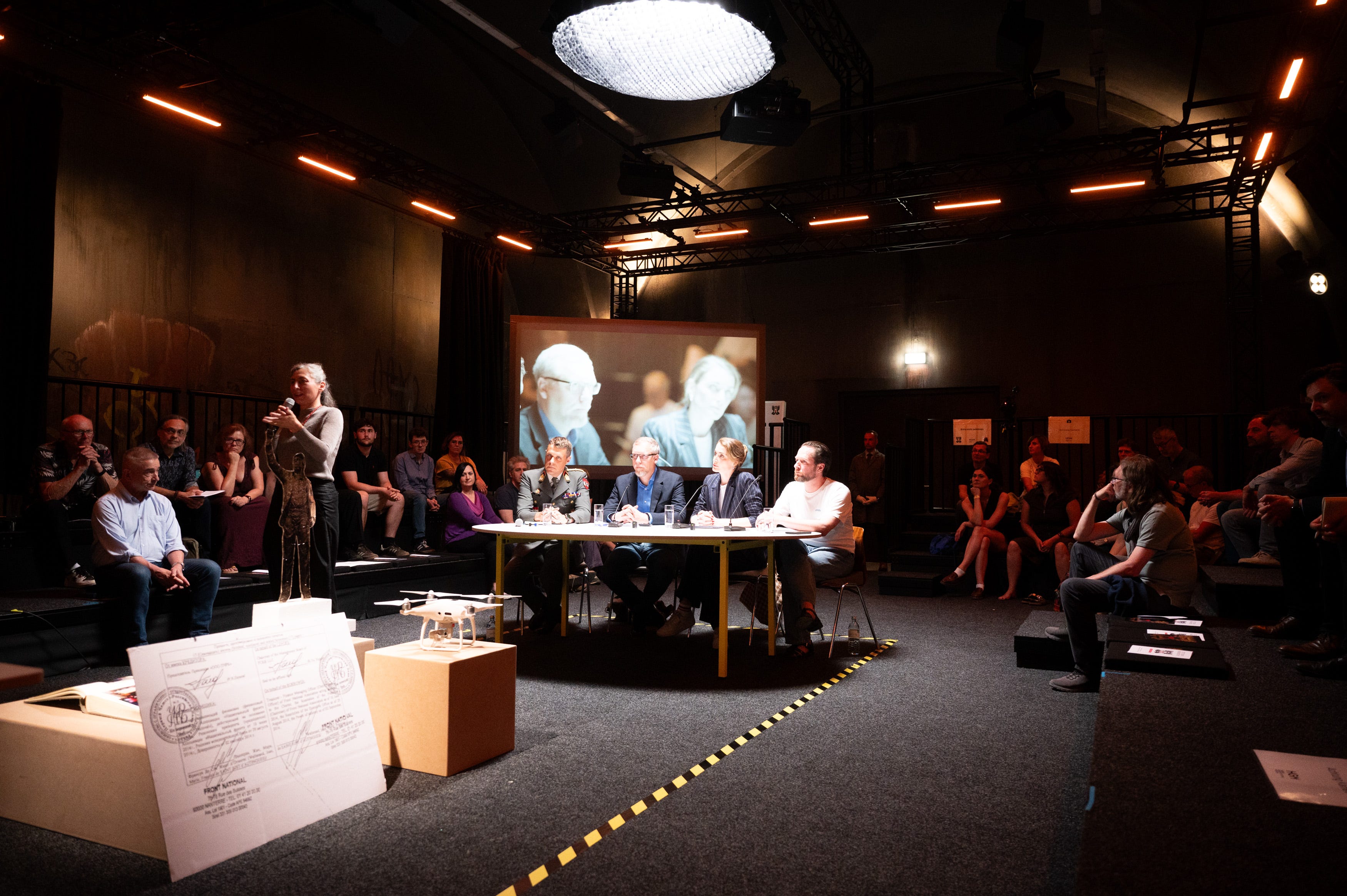
Today I am reporting on the weaponisation of the European far right by autocratic forces outside of Europe – weaponisation that aims at undermining European unity, weakening liberal democracy, and turning the continent to a voiceless appendage of their geopolitical projects.
This weaponisation is part of a particular type of relations between states, namely political warfare. Political warfare occupies a grey zone between peace and open conflict, deploying instruments that exceed the reach of soft power and conventional diplomacy while stopping short of kinetic force. It becomes the tool of states that seek to shape the behaviour and thinking of other nations but find peacetime means inadequate and conventional warfare either too costly, too risky, or otherwise beyond reach.
Instruments of political warfare include both overt and covert operations, and range from economic sanctions and propaganda through disinformation and alliance-building with opposition forces to support for separatist activities and paramilitary resistance in adversary states.
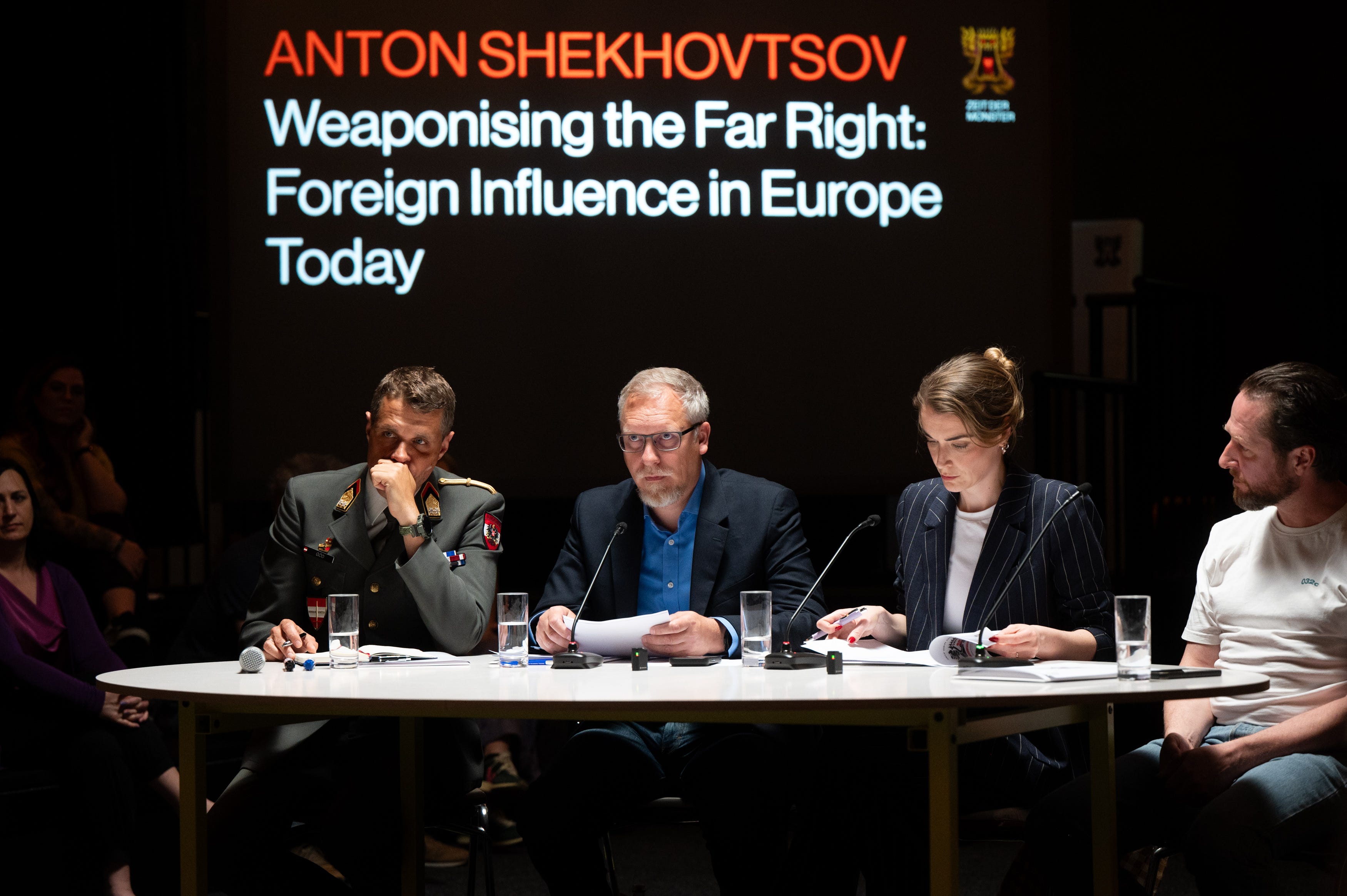
Weaponisation of the European far right belongs to several categories at once: not only is it about using the European far right to amplify propaganda and disinformation produced by autocratic regimes – it is also about strengthening those forces in Europe who, by their very nature, undermine the democratic cohesion of Europe, making the continent susceptible to the influence of illiberal regimes.
Not every act of international cooperation with the European far right is an episode of political warfare. Consider, for example, Alexander Dugin, the Russian fascist ideologue who, acting as an independent political activist, built extensive transnational networks with the European far right from the late Soviet period onward – cultivating ties with the French New Right, Spanish and Belgian neo-fascists, and other ultranationalist circles through conferences and ideological exchanges. His goal was a broad anti-liberal, anti-American alliance promoted through neo-Eurasianism and the “Fourth Political Theory”. Yet these activities reflected personal ambition rather than Russian state direction.
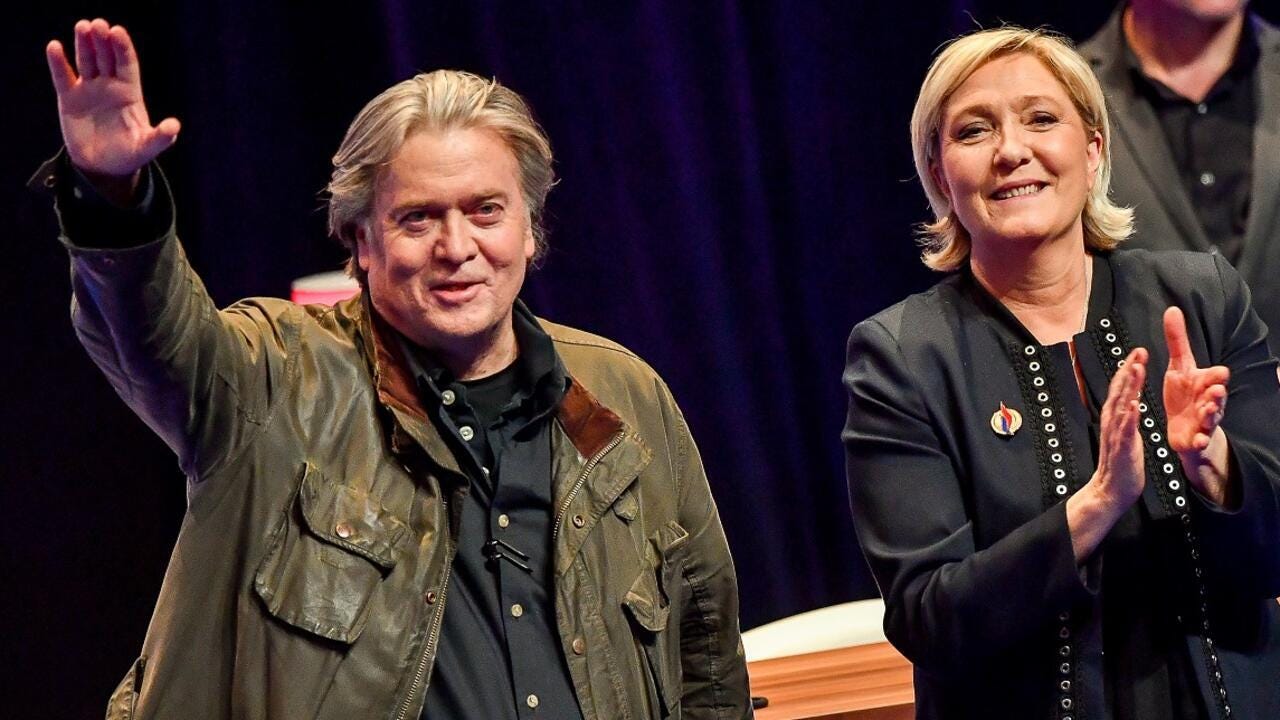
Or consider Steve Bannon, one of the leading American far-right activists. After leaving the White House, where he worked as Chief Strategist and Senior Counsellor to President Donald Trump until 2017, Bannon actively toured Europe in 2018 to build alliances with major far-right parties such as France’s Rassemblement National (then Front National), Italy’s Lega, Germany’s Alternative für Deutschland (AfD), and others, positioning himself as an advisor and attempting to unite them under his “Movement” for the 2019 European Parliament elections. The rationale behind his attempts was to foster a transatlantic far-right network, but, as in the case of Dugin, it was his personal ambition rather than action on behalf of the US.
At the same time, while the international activities of Dugin or Bannon are rightfully considered private political entrepreneurship, their transnational contacts become useful to their respective states once they decide to adopt tactics of political warfare and interfere in domestic political processes in target countries.
In the Russian case, much of external action involving the European far right and directed by Kremlin-affiliated stakeholders has emerged from engagement with European right-wing activists and politicians for domestic purposes. The very first contacts between representatives of European far-right parties and Russian officials developed around Moscow’s need to provide international legitimacy to illiberal developments inside and outside Russia. European far-right politicians have been regularly invited to play the role of “international election observers” to whitewash electoral fraud conducted by the Russian state; they have been engaged by Russian state-controlled media to give comments commending Putin’s policies to Russian audiences; or they have taken part in high-profile conferences and roundtables to endorse Moscow’s international behaviour.
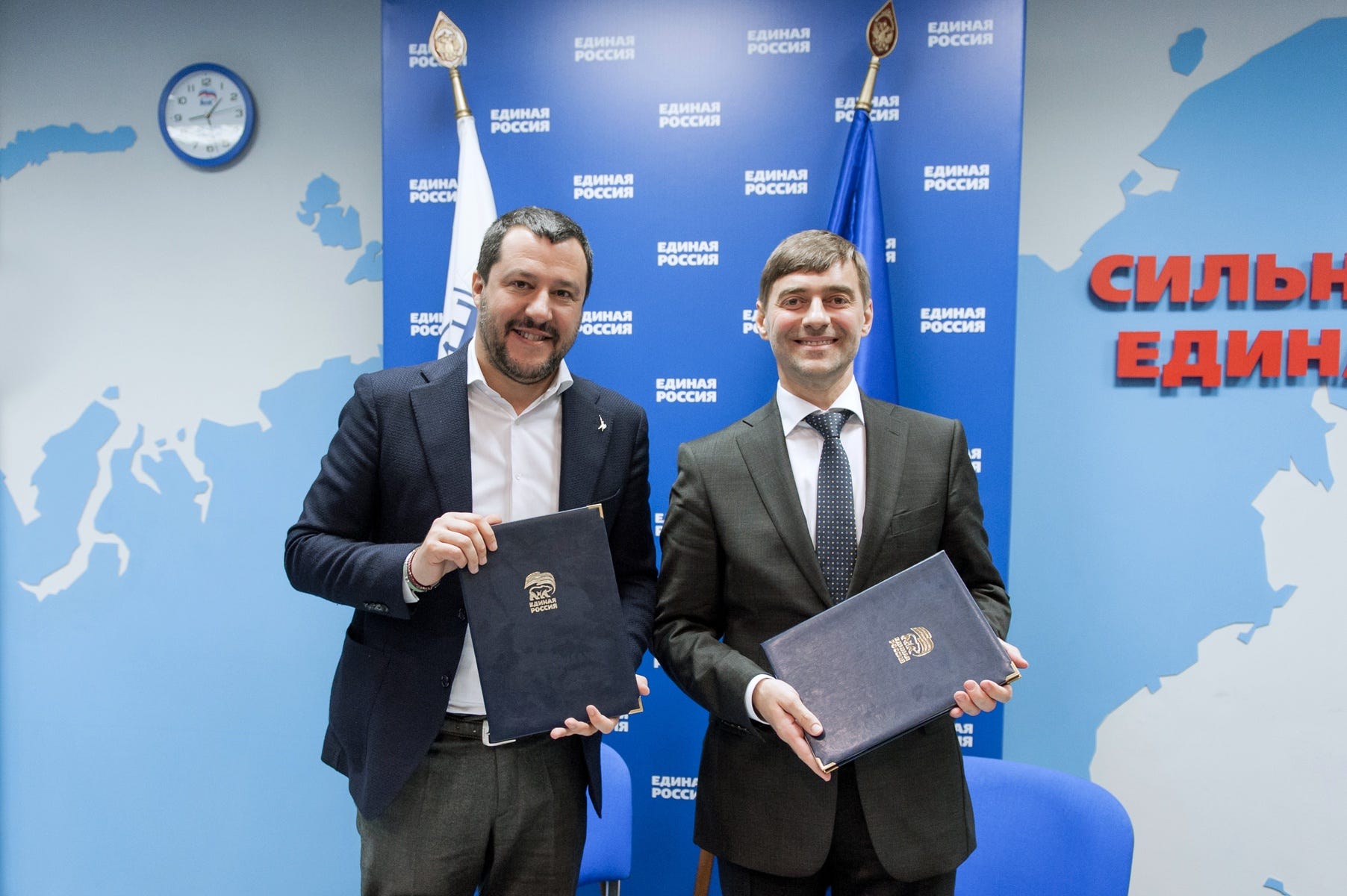
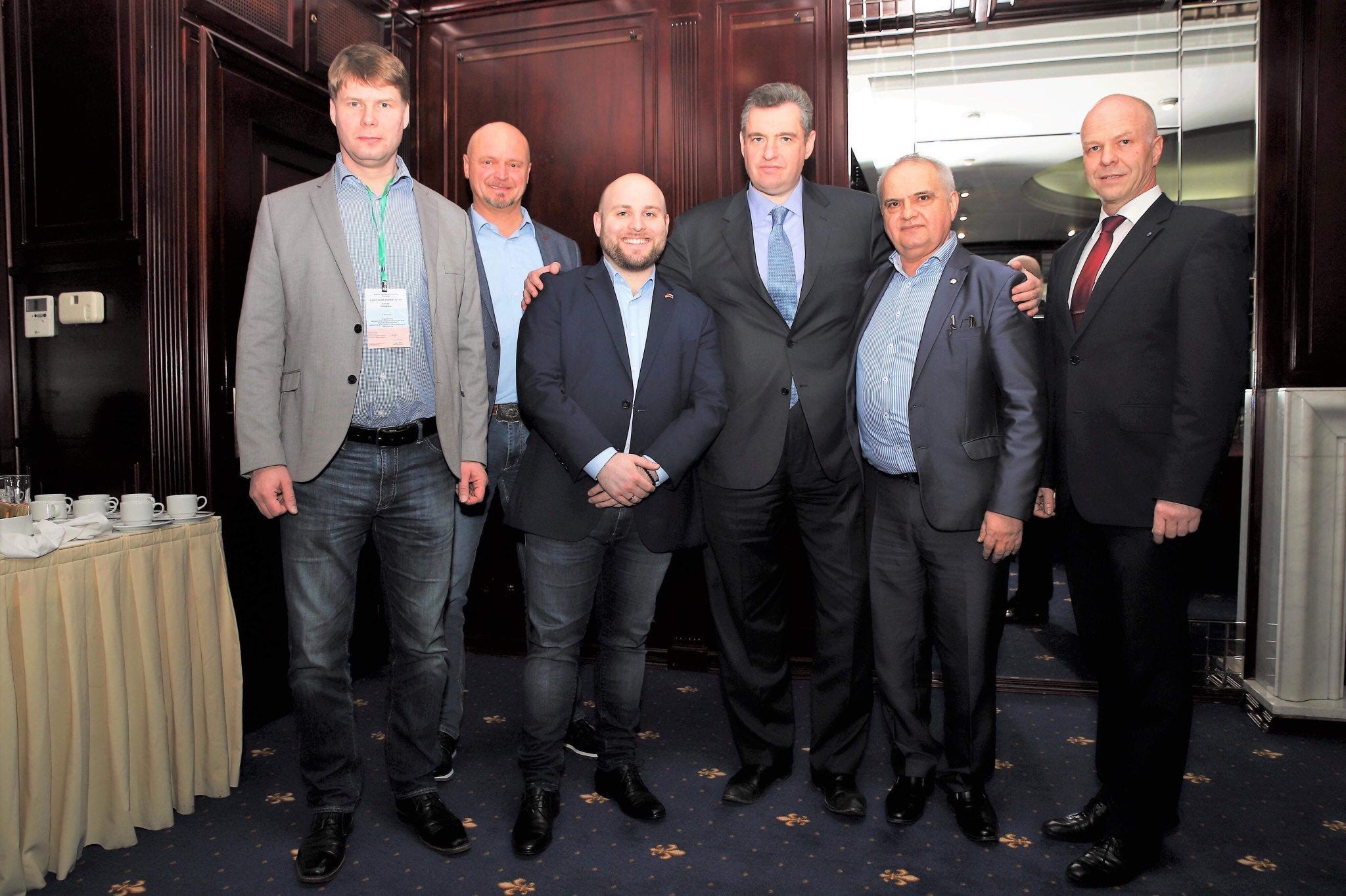
When trust is established, the relations between representatives of the European far right and Russian officials are taken to a higher level. Usually, this higher level of relationship involves signing agreements of cooperation between the ruling Russian party, “United Russia”, and European radical right-wing parties. Such agreements were signed between “United Russia” and the FPÖ under Heinz-Christian Strache in December 2016, and the Italian Lega of Matteo Salvini in March 2017. The significance of these agreements, however, should not be overestimated: rather than pointing at any joint activities of the signatories, they are first and foremost meant to symbolise trust between them.
Trust, which is not always respected by the Russian side. When Strache and his ally Johann Gudenus found themselves at the centre of the “Ibiza Affair”, Moscow did little, if anything, to minimise damage to their reputations. The lesson is clear: Moscow exploits relations with the European far right as long as they serve its agenda, but has zero respect for its so-called allies when they are in trouble. Relations between the FPÖ and Moscow were structurally unequal from the outset: it was the Kremlin, not the Austrian far-right party, that ultimately determined whether to upgrade or downgrade the level of contact between them.
In France, relations between the French far-right party Front National (or Rassemblement National, as it has been called since 2018) and Russian officials intensified gradually from the late 2000s onward, particularly after the 2008 Russo-Georgian war, as pro-Kremlin French activists and intermediaries helped establish channels between the party and Russian political elites.
These relations culminated in overt political and financial cooperation surrounding the Russian annexation of Crimea and the war in Ukraine, when the French far right publicly echoed Kremlin narratives, supported Russian geopolitical positions, and secured Russian financial backing through loans connected to Russian banks and networks close to the Russian ruling elite.
In Italy, contacts between the Lega party and Russian officials developed progressively from the early 2010s through ideological convergence around anti-EU, anti-globalist, and pro-sovereignty narratives, with figures such as Matteo Salvini cultivating close contacts with Russian political elites and openly admiring Putin’s leadership model.
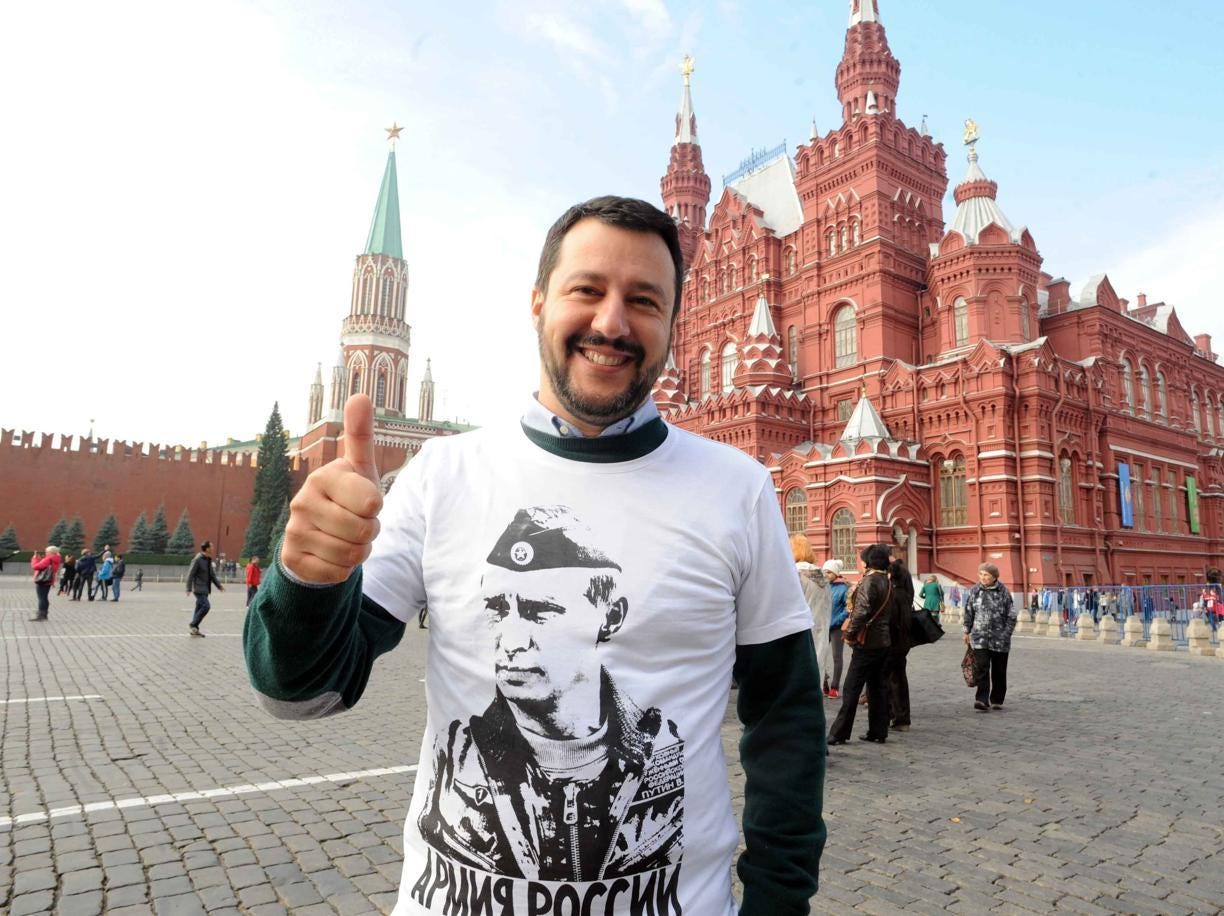
The relationship deepened through institutional and informal cooperation involving Russian state actors, business intermediaries, and far-right networks, including official visits to Moscow and occupied Crimea, participation in pro-Kremlin forums, and collaboration with Russian media and organisations promoting illiberal ideas.
There is also a significant covert aspect to the relations between the European far right and Russian regime-aligned stakeholders. Certain representatives of European far-right parties who are members of local or national parliaments, or the European Parliament, received financial rewards from representatives of the Putin regime for initiating resolutions or raising questions beneficial to Russian political and geopolitical interests.
Moreover, following the imposition of European sanctions on Russian media after the beginning of the Russian full-scale invasion of Ukraine in 2022, some European far-right activists have run so-called alternative media or accounts on social media functioning as front organisations for Russian interests and secretly backed financially by people linked to the Kremlin regime. This helps Moscow to facilitate the process that I have called “narrative laundering”. It implies the movement of narratives in the media sphere, where the original source that produces these narratives is either forgotten or impossible to determine. In other words, through narrative laundering, pro-Kremlin actors move malign messages from fringe websites and instances of “inauthentic behaviour” on social media into mainstream media outlets that would not otherwise carry content traceable to Kremlin sources – and would not report it if they knew.
Yet transnational relations with the European far right are not confined to Russia alone.
Following the return of Donald Trump to the White House at the beginning of 2025, there has been a dramatic increase in the contacts between US stakeholders and representatives of the European far right. They did not emerge in a vacuum in 2025, as they built upon three distinctive yet overlapping networks.
The first one was the network comprising organisations and individuals active in a wide range of transatlantic initiatives to roll back reproductive and LGBT rights.
The second one was an ecosystem of national-conservative think-tanks and events such as the National Conservatism Conference, Conservative Political Action Conference, The Heritage Foundation, Alliance Defending Freedom, and some others, who had already been active in Europe promoting ultraconservative American interests.
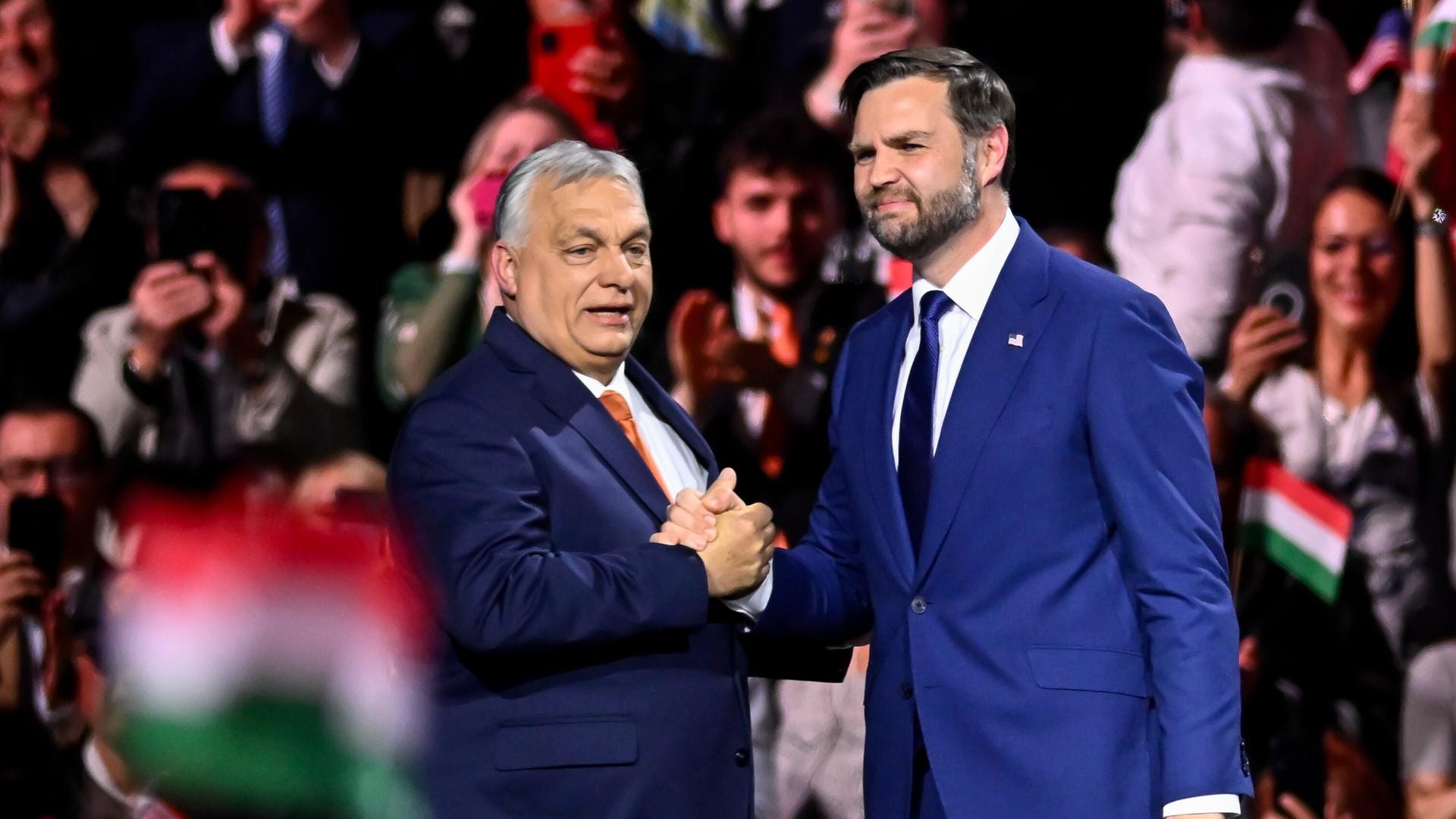
The third was built around the illiberal regime of Viktor Orbán in Hungary, and specifically the Mathias Corvinus Collegium (MCC) that operated as a hub for American-European far-right networking. The MCC received extensive support from Orbán’s government, and the funding was used, in particular, to support generous fellowships for international far-right figures, pay for speaking engagements, sponsor conferences and networking events, support publications and media platforms, and finance research and training programmes aligned with Orbán’s ideological agenda.
Cooperation between the Trump administration and the European far right has received a virtually open endorsement in the revised US National Security Strategy published in December 2025. Echoing far-right rhetoric, the document speaks of Europe’s alleged “stark prospect of civilizational erasure” and “loss of national identities”; it calls for “cultivating resistance to Europe’s current trajectory within European nations” and welcomes “the growing influence of patriotic [read: far-right] European parties”.
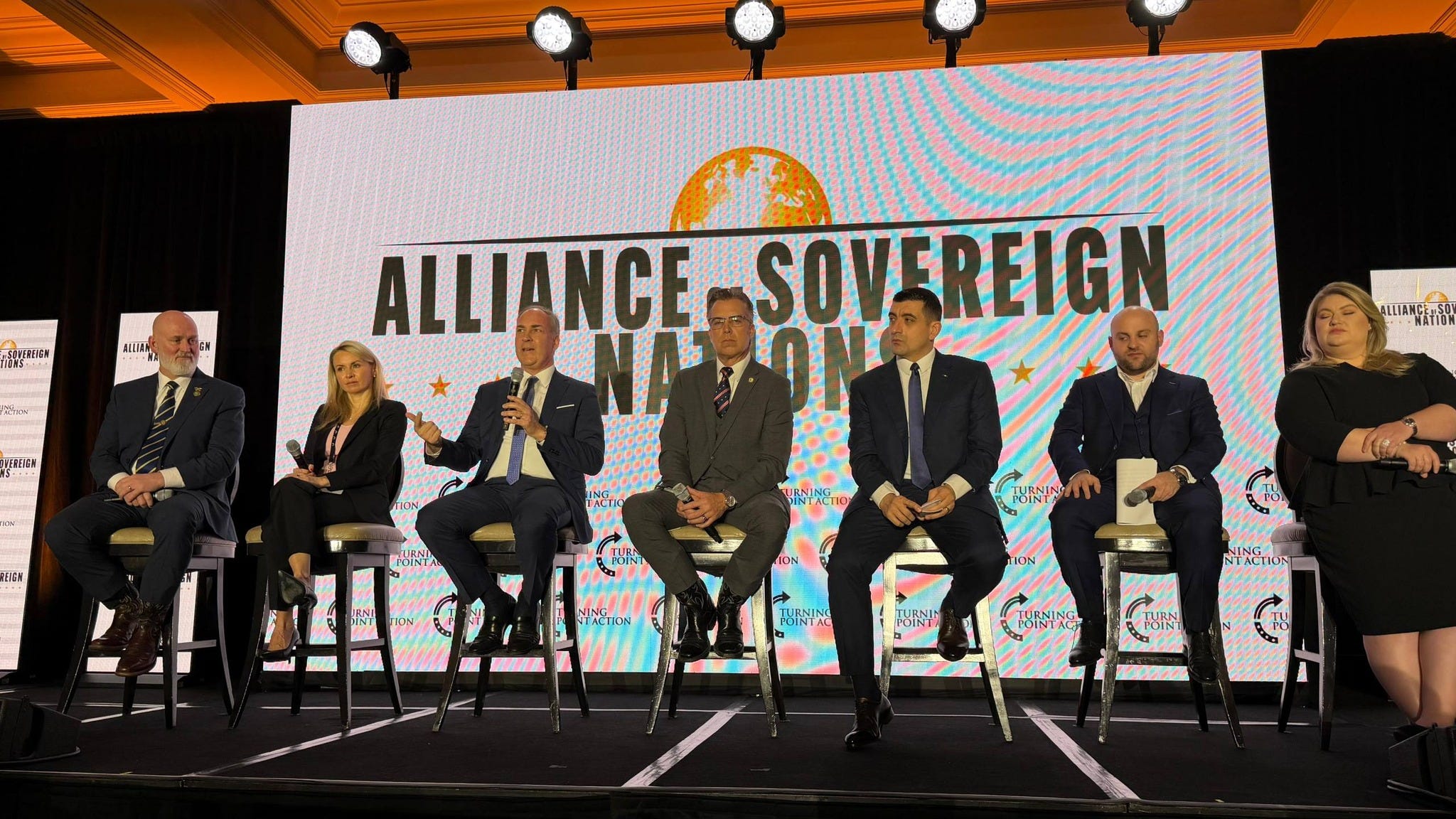
In practical terms, one of the follow-ups to the publication of the US National Security Strategy is the launch of the “Alliance of Sovereign Nations” (ASN) in Washington DC in early spring 2026. The ASN was presented as a transatlantic network linking the MAGA movement with European far-right around the agenda of “national sovereignty”, opposition to globalism, resistance to the EU, and the weakening of supranational governance structures. By hosting representatives of far-right parties from Austria, Germany, Romania, Estonia, Belgium, and some other European countries, the ASN apparently intends to fragment European unity, amplify far-right influence, and undermine the bloc’s regulatory and geopolitical resilience, effectively serving as a vehicle for foreign interference and the erosion of democratic governance.
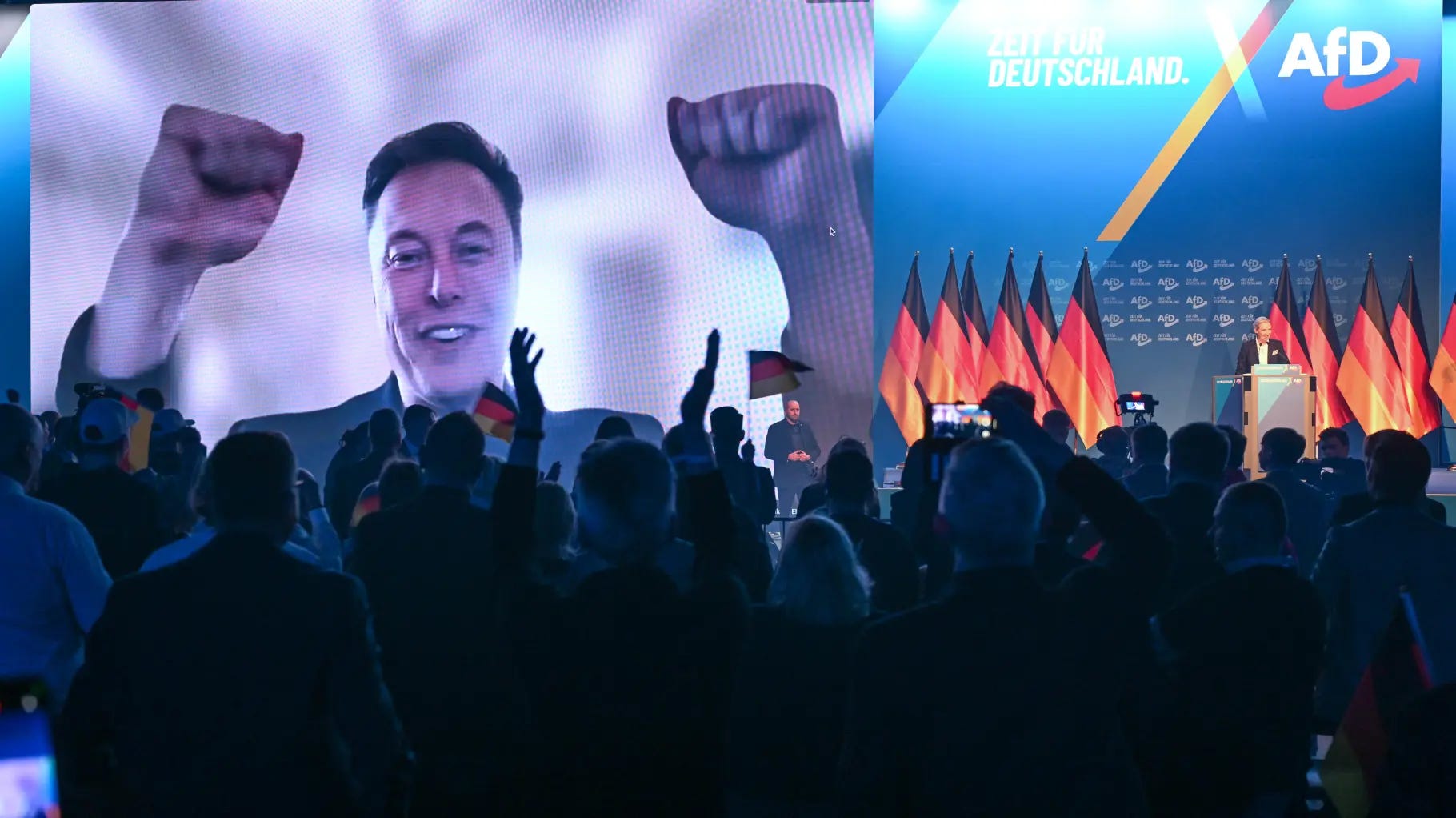
However, the cooperation between the MAGA movement and the European far right is increasingly overshadowed by the influence of US techno-oligarchs, such as Elon Musk and Peter Thiel, who leverage financial, technological, and media power to amplify far-right narratives and undermine EU unity, particularly in digital and financial regulation. For example, in the run-up to the 2025 German federal elections, Musk repeatedly promoted the AfD while using his platform X to attack EU regulations such as the Digital Services Act, which was designed to strengthen fundamental rights online, enhance user control, and limit the spread of illegal and harmful content. Amid the regulatory conflict between the European Commission and X, Musk even went so far as to call for the dismantling of the EU.
Unlike overt MAGA engagement, which many Europeans may recognise and resist as foreign political interference, techno-oligarchic influence operates through less visible, harder-to-trace channels – algorithmic manipulation and communicative power – that are less likely to trigger public scepticism. Association with Big Tech is less toxic than the ties with the Kremlin or the White House, making it a more insidious and potentially more effective vector for fragmenting European unity and undermining democratic governance.
Attacks on European unity and liberal democracy by autocratic forces in Russia, the US, and some other centres of geopolitical power are readily explicable. In the context of today’s geopolitical upheavals and the global erosion of democracy, a united Europe holds the torch of the free democratic world – and illiberal regimes would like to see that flame extinguished.
These attacks pose an existential challenge to Europe – a challenge that requires a whole-of-society and a whole-of-Europe response.
At the level of policy, EU member states and EU institutions must urgently strengthen the core elements of Europe’s defence and security within the framework of strategic autonomy and independence, involving European states that are not EU members, such as the United Kingdom, Norway, and Ukraine. Equally pressing is the reinforcement of independent, publicly funded quality media, and the introduction of robust regulations to counter foreign interference wherever it originates.
The private sector – above all in the field of technology – must think and act strategically, accelerating the construction of European data centres and the development of cloud and AI technologies, to match the technological power of Europe’s competitors and adversaries. European technological sovereignty is not merely an economic aspiration; it is a democratic necessity.
Finally, academia and civil society carry a responsibility that no government can discharge on their behalf: fostering media and digital literacy across all age groups, deepening citizens’ engagement in democratic life, and building the kind of broad societal resilience that makes populations harder to manipulate and divide.